Please Don't: Visitor Behavior That Made the News in Japan, and What to Do Instead
Every year, a few scenes involving travelers make the Japanese news: crowds stepping into a road for a photo, a scratched shrine gate, a mountain climbed through the night. Most of the people involved were not trying to cause trouble. They simply didn't know how the place works, or what it means to the people who live there. This page looks at the cases that were reported, explains why local people were upset, and suggests what to do instead. Some of these are crimes under Japanese law; most are manners. We show which is which, because both matter.
This page may contain affiliate links. If you buy through them, we may earn a commission at no extra cost to you.
- Photo spots: Kamakura (Kanagawa) and Fujikawaguchiko (Yamanashi)
- Shrines: graffiti, scratches and climbing
- Deer in Nara (Nara), Mt. Fuji at night, drinking in the street
- A table: law or manners?
About this page. We describe what happened using the original news reports and the official responses of cities, railways, shrines and prefectures. We don't name nationalities: these situations involve visitors from everywhere, and Japanese visitors too. This is not legal advice.
Law or manners? The quick table
1. The railroad crossing in Kamakura (Kanagawa)
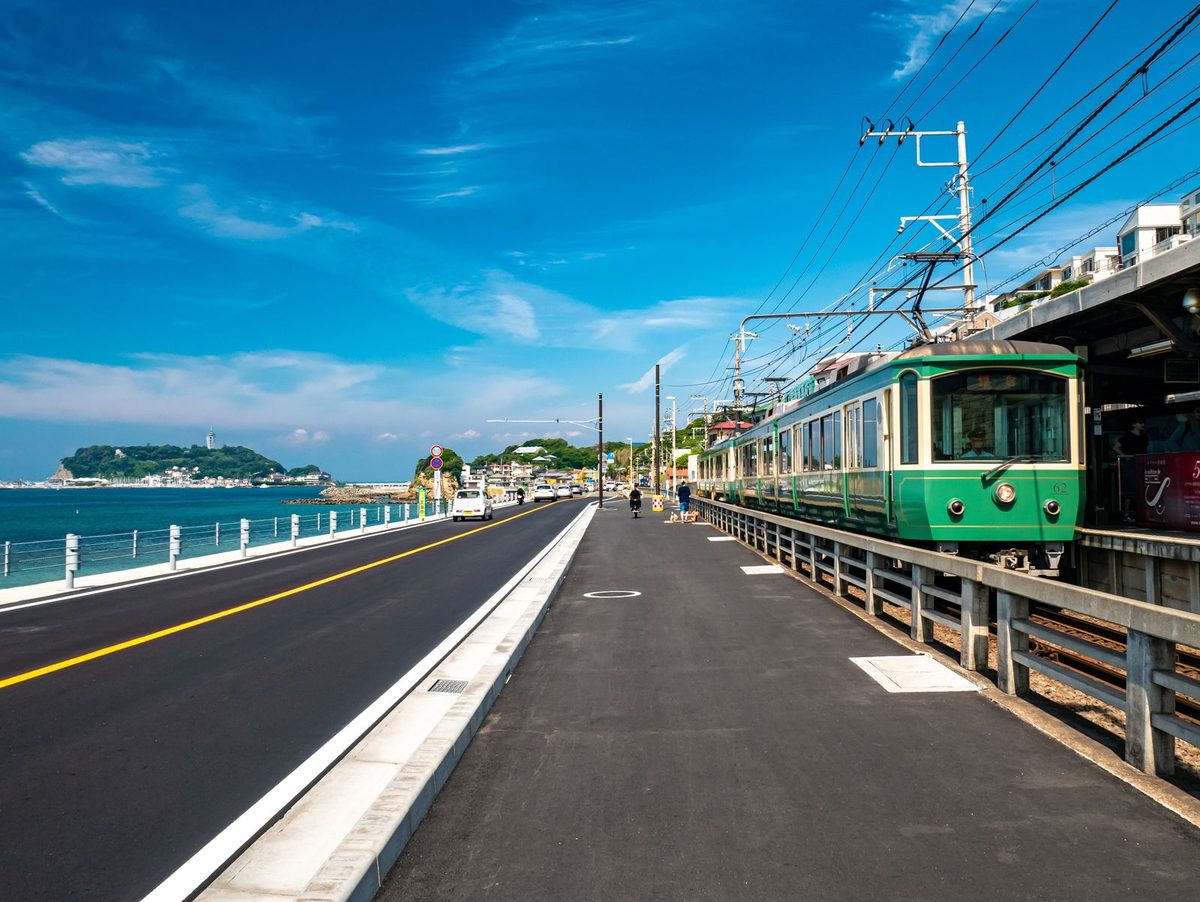
What happened. The crossing by Kamakura-Kokomae Station in Kamakura (Kanagawa), where a small green Enoden train runs along the sea, became a famous photo spot. Kamakura City (Kanagawa) noted people taking photos from the road and from the track area. In September 2025, the city tried guiding visitors to a nearby park as a photo area; the Kanagawa Shimbun reported about 7,500 visitors over a three-day weekend, with people running into the road and occupying the sidewalk. From October 1, 2025, the city has used security guards to guide visitors to the park next to the station.
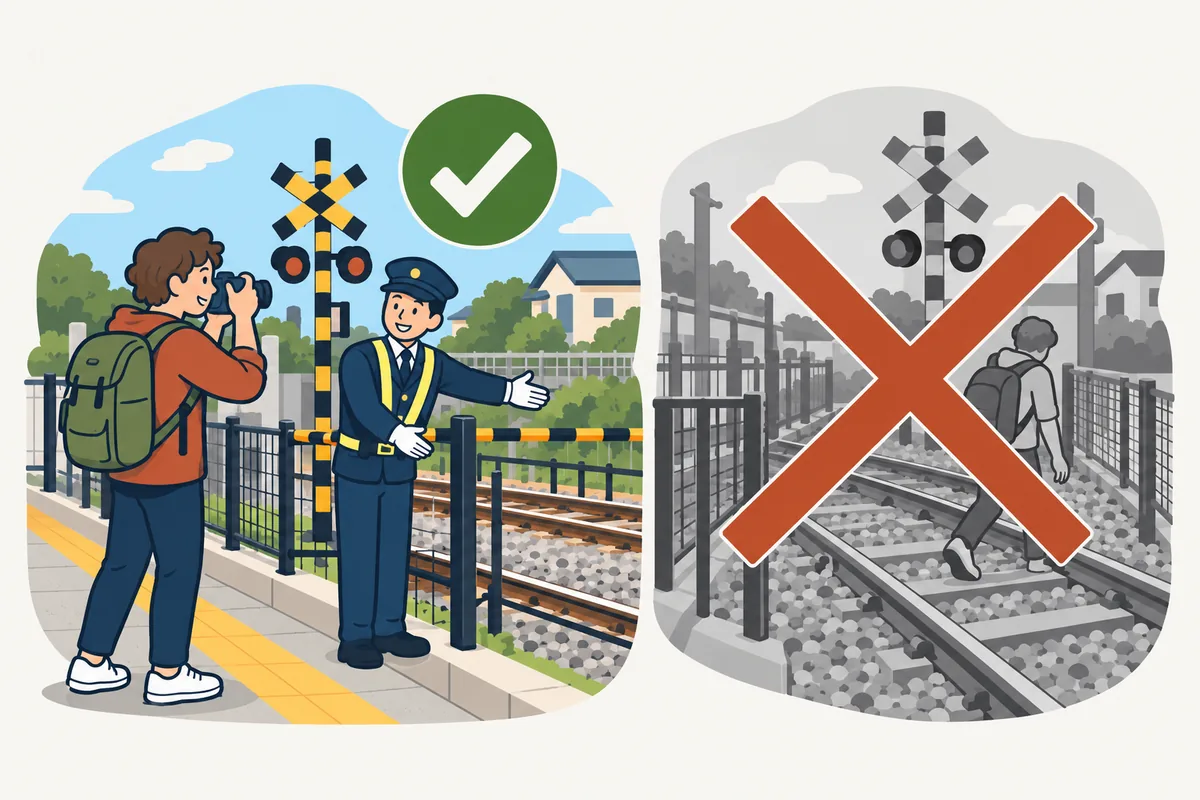
Why it upsets people. It is a working railway and a narrow coastal road where residents live and drive. Enoden asks people not to enter the tracks, not to enter private land and not to step into the road, and not to photograph other passengers or neighbors without asking.
Instead. Use the photo area the city guides you to, stay on the sidewalk, and never step onto the tracks. Entering railway grounds without reason is an offence under the Railway Business Act (Article 37).
2. The convenience store view of Mt. Fuji in Fujikawaguchiko (Yamanashi)
What happened. A convenience store in Fujikawaguchiko (Yamanashi) with Mt. Fuji rising behind it became a popular photo spot. The Yomiuri Shimbun reported problems with people crossing the road, littering and entering private property. On May 21, 2024, the town finished installing a mesh screen about 2.5 m high and 20 m long to block the view, along with fences to stop people crossing. The screen was taken down on August 15, 2024 ahead of a typhoon, and the mayor said at the end of August that it would not be put back for now.
Why it upsets people. The road is a busy local road, and the land across it belongs to a dental clinic and neighbors.
Instead. Cross only at crossings, don't stand in the road, and take your trash with you. There are many viewpoints of Mt. Fuji made for visitors.
3. Gion (Kyoto): following maiko and entering private lanes
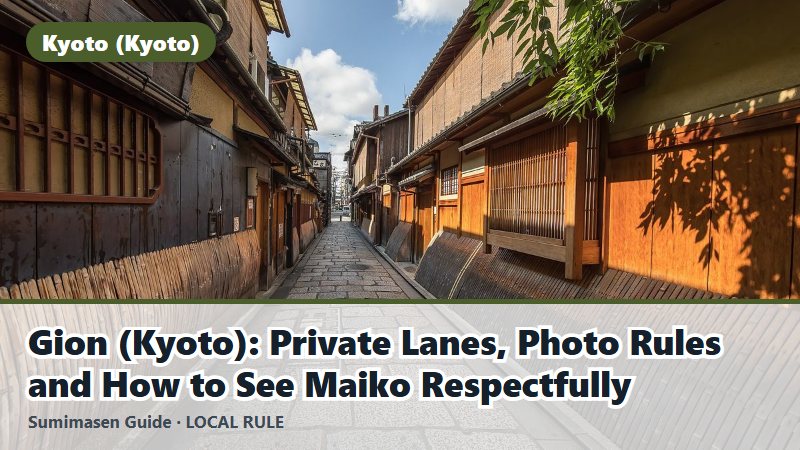
Residents of Gion (Kyoto) have asked visitors not to follow or photograph geiko and maiko without permission, and not to enter private lanes. Read our full guide: Gion (Kyoto): private lanes, photo rules and how to see maiko respectfully.
4. Shrines: scratches, graffiti and climbing
What happened. In November 2024, letters were found carved into torii gates at Meiji Jingu in Tokyo (Tokyo); a visitor was arrested on suspicion of damage to property (prosecutors later decided not to indict). In May 2024, a stone pillar at Yasukuni Shrine was spray-painted; in December 2024 a court sentenced a man to eight months in prison for damage to property and for insulting a place of worship. Separately, in October 2024, a video of someone doing pull-ups on a torii drew wide criticism, and the person deleted it and apologized.
Why it upsets people. Shrines are active places of worship, and their buildings are often old and irreplaceable. Meiji Jingu's spokesperson asked people to stop, calling the gate very precious.
Instead. Don't touch, write on, climb or hang on gates and buildings. If you want a memento, many shrines offer stamps (goshuin) and charms.
5. The deer in Nara (Nara)
The Nara Deer Preservation Foundation asks visitors not to feed the deer anything except deer crackers (shika senbei), because human food can cause indigestion and poisoning. Its veterinarian has written that about two out of three deer had plastic waste in their stomachs, and that 3.2 kg of plastic was found in one dead deer. Food smells teach deer to eat plastic bags. Instead: buy deer crackers from the official vendors, and take every bag and wrapper home with you.
6. Climbing Mt. Fuji through the night
Climbing straight through the night without rest, known in Japanese as dangan tozan ("bullet climbing"), raises the risk of altitude sickness and hypothermia, according to the official Mt. Fuji climbing site. Both prefectures now regulate it:
- Yamanashi side (Yoshida Trail): a gate closes from 2 p.m. to 3 a.m. except for people staying at a mountain hut; up to 4,000 climbers a day; a fee of 4,000 yen per person per climb.
- Shizuoka side (Fujinomiya, Gotemba and Subashiri trails): a 4,000 yen fee, a short online course before you climb, and a mountain hut booking if you start between 2 p.m. and 3 a.m.
Instead: book a mountain hut and climb in two days.
7. Drinking in the street and littering
Since October 1, 2024, Shibuya City (Tokyo) has banned drinking alcohol on streets, in parks and in other public places around Shibuya Station between 6 p.m. and 5 a.m., all year. There is no penalty, but guards patrol every night. Throwing litter away carelessly can be an offence under the Minor Offenses Act. Instead: drink in a bar or restaurant, and carry a small bag for your trash, since public bins are rare.
8. Conveyor-belt sushi
What happened. In early 2023, videos of people licking shared soy sauce bottles and cups or touching sushi on the lanes spread online. Sushiro said on February 1, 2023 that it had reported an incident at one restaurant to the police, replaced every cup and soy sauce bottle there, and would add acrylic screens between tables and lanes; for a while it served only ordered items on its lanes. A teenager was later sent to family court for damage to property, and a civil case was settled. Kura Sushi added an AI camera system to spot unusual opening of sushi covers.
Instead. Take only the plates you will eat, and never put a plate back. See how conveyor-belt sushi works.
9. Onsen and big luggage
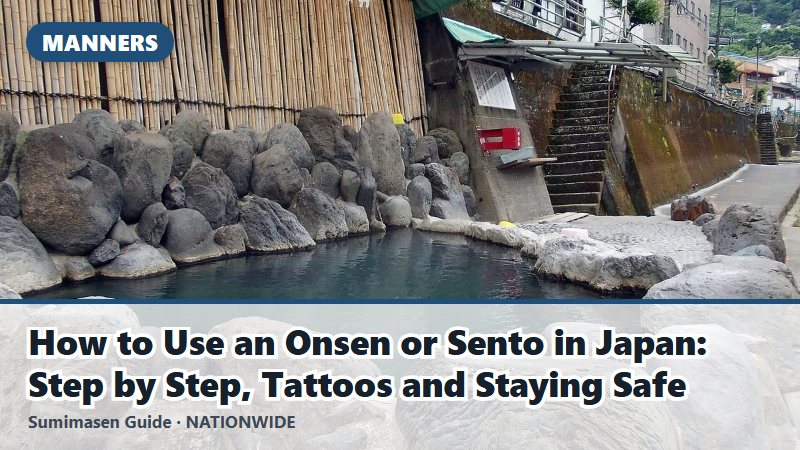
- Onsen: getting into the bath without washing, or putting your towel in the water, are the classic mistakes. See how to use an onsen or sento.
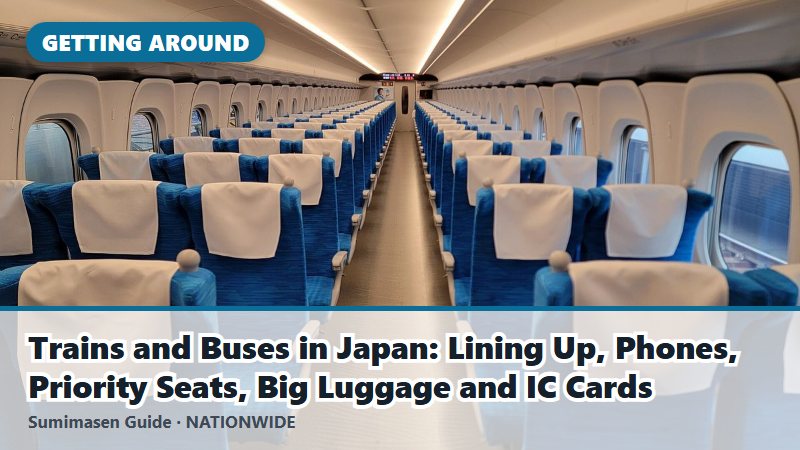
- Big suitcases on trains: on the Tokaido, Sanyo and Kyushu Shinkansen, bags over 160 cm in total need a reserved seat with an oversized baggage area, or you pay a 1,000 yen fee. See trains and buses.
The short version
- Stay on the sidewalk and off the tracks, even for a great photo.
- Don't touch, carve, write on or climb shrine buildings.
- Feed the deer only deer crackers; take your trash home.
- Book a hut for Mt. Fuji.
- Drink in bars, not on the street at night in Shibuya (Tokyo).
Nobody expects visitors to know everything. Knowing these few cases already puts you ahead, and local people notice and appreciate it.
Last reviewed: October 4, 2026. Local measures change. Please check the official pages below.
References
- Kamakura City (Kanagawa): Measures at Kamakura-Kokomae Station (Japanese)
- Kanagawa Shimbun: Photo area trial at Kamakura-Kokomae (Japanese, September 17, 2025)
- Enoden: Requests from Enoden (Japanese)
- e-Gov: Railway Business Act (Japanese)
- Fujikawaguchiko Town (Yamanashi): Safety measures, screen and fences (Japanese)
- Yomiuri Shimbun: Screen installed (Japanese, May 2024)
- Sankei Shimbun: Mayor on not reinstalling the screen (Japanese, August 30, 2024)
- Yomiuri Shimbun: Meiji Jingu torii damaged (Japanese, November 2024)
- Yomiuri Shimbun: Ruling on Yasukuni Shrine graffiti (Japanese, December 25, 2024)
- e-Gov: Penal Code (Japanese)
- e-Gov: Minor Offenses Act (Japanese)
- Nara Deer Preservation Foundation: Awareness (Japanese)
- Yamanashi Prefecture: Yoshida Trail rules (Japanese)
- Shizuoka Prefecture: Climbing rules on three trails (Japanese)
- Official Mt. Fuji Climbing Site: FAQ
- Shibuya City (Tokyo): Street drinking ordinance (Japanese)
- Sushiro: Notice on the incident (Japanese, PDF, February 1, 2023)
- Yomiuri Shimbun: Teenager sent to family court (Japanese, August 1, 2023)
- Nikkei: Civil case settled (Japanese, August 1, 2023)