Trains and Buses in Japan: Lining Up, Phones, Priority Seats, Big Luggage and IC Cards
Japan's trains and buses are easy to use once you know a handful of habits that everyone around you follows without thinking: where to stand on the platform, what to do with your phone, and where your suitcase can go. None of these are hard, and most are written down by the railway companies themselves. This guide collects them in one place, including the one rule that can cost you money on the Shinkansen, and the city bus tips that make Kyoto (Kyoto) much less stressful.
This page may contain affiliate links. If you buy through them, we may earn a commission at no extra cost to you.
- Lining up and letting people off first
- Phones and priority seats: the shared rule of 37 railway companies
- Large suitcases on the Shinkansen: reserve, or pay 1,000 yen
- IC cards, and how city buses in Kyoto (Kyoto) work
On the platform: line up, let people off
Railway companies ask the same simple thing. Fukuoka City Subway asks passengers to line up in order on the black lines painted on the platform; Meitetsu asks for orderly lines and for passengers getting off to go first; Tokyo Metro asks people boarding to leave space in front of the doors, and people standing by the door inside to step off briefly to let others out. In practice:
- Stand in line at the markings on the platform floor.
- When the doors open, wait at the side until everyone has got off.
- Board, and move into the car instead of stopping by the door.
Phones and priority seats
Since October 1, 2015, JR East and 36 other railway companies have used the same wording: near the priority seats, turn your phone off when the train is crowded; elsewhere, set it to silent mode and please refrain from calls. Tokyo Metro adds that calls are discouraged however crowded the train is. Priority seats (優先席, yusenseki) are marked by signs and seat colors; give them up to people who need them.
Large suitcases on the Shinkansen
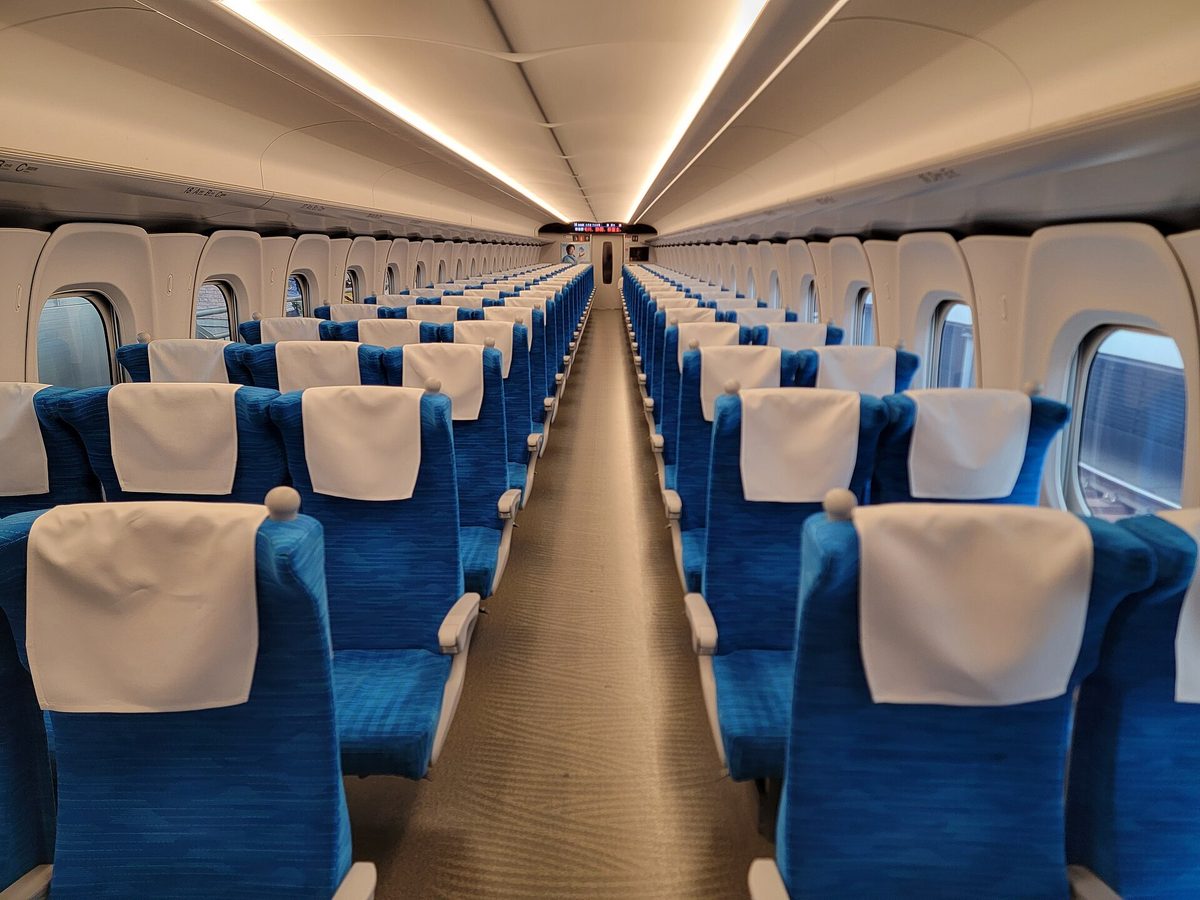
On the Tokaido, Sanyo and Kyushu Shinkansen (from Tokyo Station to Kagoshima-Chuo Station), JR Central says baggage with a total of three dimensions between 161 and 250 cm must go in the space behind a seat with an oversized baggage area, and a reservation is required. These seats cost the same as other reserved seats. If you bring oversized baggage without a reservation, you are charged a 1,000 yen fee; JR Kyushu adds that you then put the bag where the train crew tells you. Baggage over 250 cm cannot be brought on board at all. A typical large suitcase can be over 160 cm in total, so measure before you book.
Traveling light is easier everywhere. Hotel-to-hotel luggage delivery is widely available; in Kyoto (Kyoto), the city recommends "hands-free" sightseeing with luggage delivery rather than taking suitcases onto city buses.
IC cards: tap in, tap out
An IC card is a rechargeable card you tap at the ticket gate (and on many buses). JR East lists ten cards that work in each other's areas across Japan: Kitaca, PASMO, Suica, manaca, TOICA, ICOCA, PiTaPa, SUGOCA, nimoca and Hayakaken. One limit to know: a single trip cannot cross from one card area into another.
For short visits, JR East sells Welcome Suica: valid for 28 days including the day of purchase, no deposit, in principle one per person. The remaining balance is not refunded, and it is topped up with cash only. It is sold at the airports and at a limited list of JR East stations, so check JR East's page before you go. There is also a Welcome Suica Mobile app for iPhone.
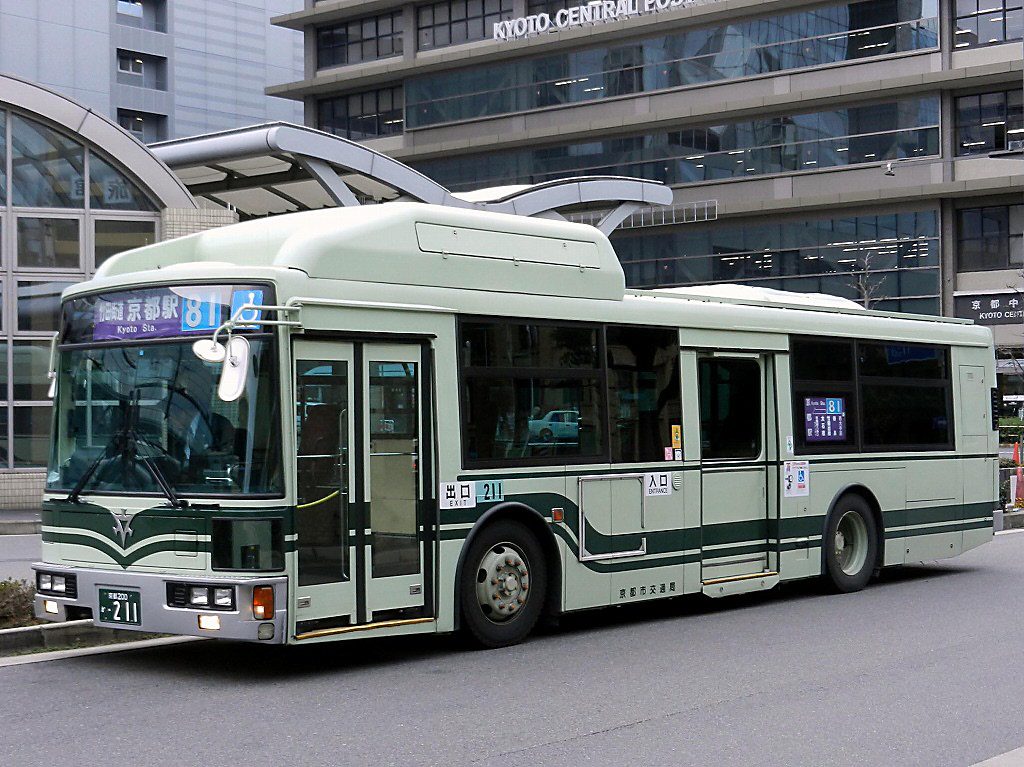
Kyoto (Kyoto) city buses
Kyoto (Kyoto)'s city buses get very crowded around popular sights. The Kyoto City Transportation Bureau's guide for regular routes says: board at the rear door, get off at the front door, and pay when you get off. IC cards such as ICOCA, Suica and PASMO work; credit cards and the Japan Rail Pass do not.
- Tourist express buses (EX100 and EX101) have run on weekends and holidays since June 1, 2024, with a fare of 500 yen for adults. On these, you board at the front and get off at the rear.
- The bus-only one-day pass is gone: sales ended September 30, 2023, and it could be used until March 31, 2024. The subway and bus one-day pass (1,100 yen for adults) is still sold, and the city's aim is to spread riders onto the subway.
- The city asks visitors not to bring large luggage onto city buses and recommends luggage delivery instead.
- Kyoto City (Kyoto) has announced a plan to charge non-residents a higher fare than residents on city buses within fiscal 2027. It is a plan that needs national approval, so check the latest fare before you travel.
Quick checklist
- Line up at the platform markings; let people off first.
- Phone on silent; no calls on board.
- Suitcase over 160 cm in total? Reserve an oversized baggage seat on the Shinkansen.
- Get an IC card and keep it topped up with cash.
- In Kyoto (Kyoto), consider the subway, and send big bags ahead.
Rather ride on two wheels? See rental and share bikes and e-scooters and LUUP.
Last reviewed: October 4, 2026. Fares and rules change. Please confirm on the official pages below.
References
- JR East FAQ: Phone manners on trains (Japanese)
- Tokyo Metro: Phone manners (Japanese, 2015)
- Tokyo Metro: Requests for safe and stable service (Japanese, PDF)
- Meitetsu: Manners campaign (Japanese)
- Fukuoka City Subway: Manners (Japanese)
- JR Central: Oversized baggage (English)
- JR Kyushu: Oversized baggage (Japanese)
- JR East FAQ: IC cards usable across Japan (Japanese)
- JR East: Welcome Suica
- Kyoto City Transportation Bureau: How to ride the city bus (Japanese)
- Kyoto City Transportation Bureau: Tourist express buses (English)
- Kyoto City Transportation Bureau: End of the bus-only one-day pass (Japanese)
- Kyoto City (Kyoto): Plan for resident-priority bus fares (Japanese, June 3, 2026)
- Kyoto City (Kyoto): Hands-free sightseeing (Japanese)