Zazen in Japan: How to Try Zen Meditation at a Temple, What to Wear and What to Expect
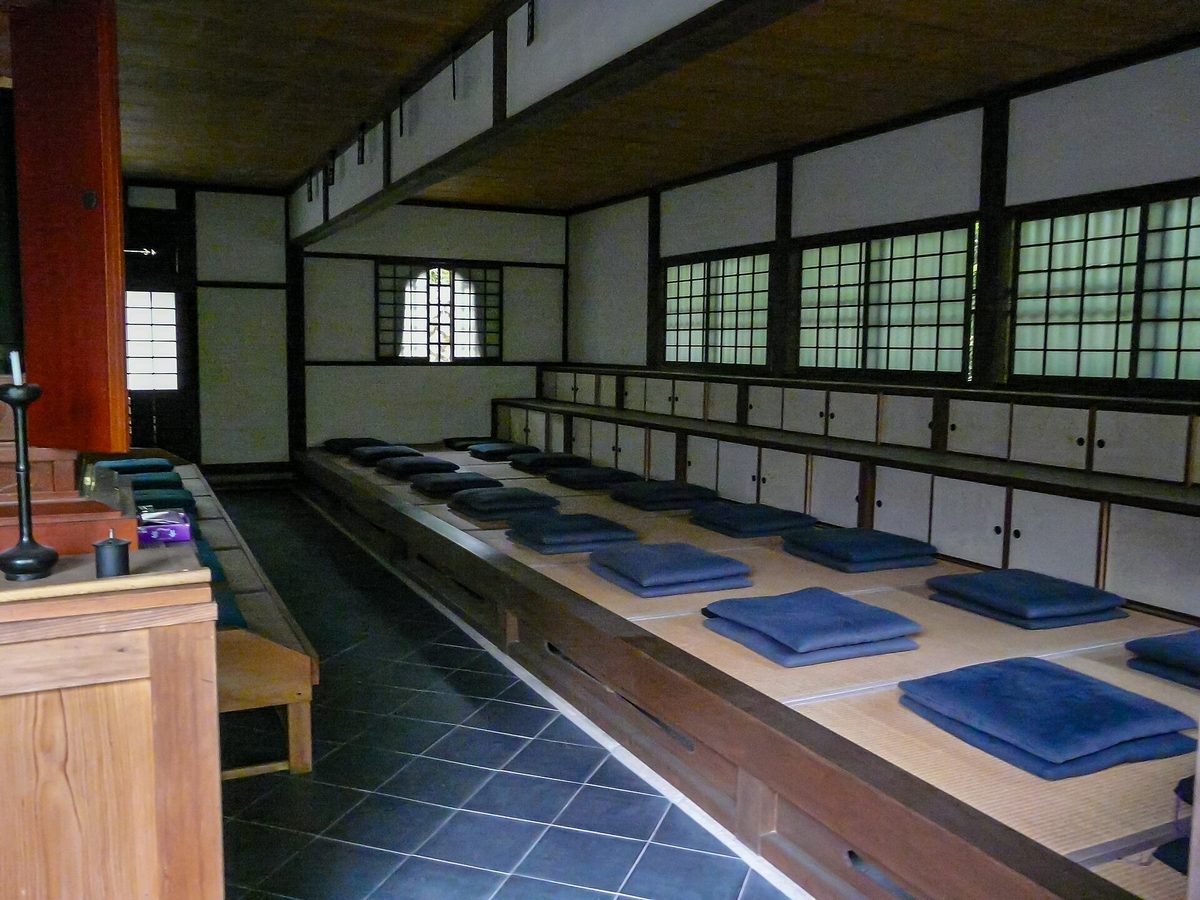
Sitting quietly in an old temple hall, with nothing to do but breathe, is one of the most memorable things you can try in Japan. Many people are put off by worries: Will I have to sit in full lotus? Will I be hit with a stick? What if I don't speak Japanese? The reassuring answer is that several temples welcome first-timers, some explain everything in English, and nobody expects you to force your legs into a painful position. This guide explains what zazen is, lists temples whose own websites confirm English guidance, prices and times, and walks you through the etiquette on the day.
This page may contain affiliate links. If you buy through them, we may earn a commission at no extra cost to you.
- What zazen is, and how it relates to "mindfulness"
- Temples with English guidance: booking, fees and times in one table
- A session step by step: bowing, sitting, breathing, finishing
- What to wear, the keisaku stick, photos and phones
- Temple lodging (shukubo) and sutra copying (shakyo) at Koyasan (Wakayama)
Please read this first. Each temple sets its own rules, and the monk leading the session always comes first. The temple details below were checked on the temples' own websites on October 4, 2026; schedules change and sessions are sometimes cancelled for temple events, so check again before you go. This page is not medical advice.
What is zazen?
Zazen (坐禅) means "seated meditation." It is the central practice of Zen Buddhism. According to the official site of the Joint Council for Japanese Rinzai and Obaku Zen, Japan has three main Zen lineages today: Rinzai, Obaku and Soto. The way of sitting is broadly similar, but the details of the hall, the bows and the instructions differ between schools and between temples.
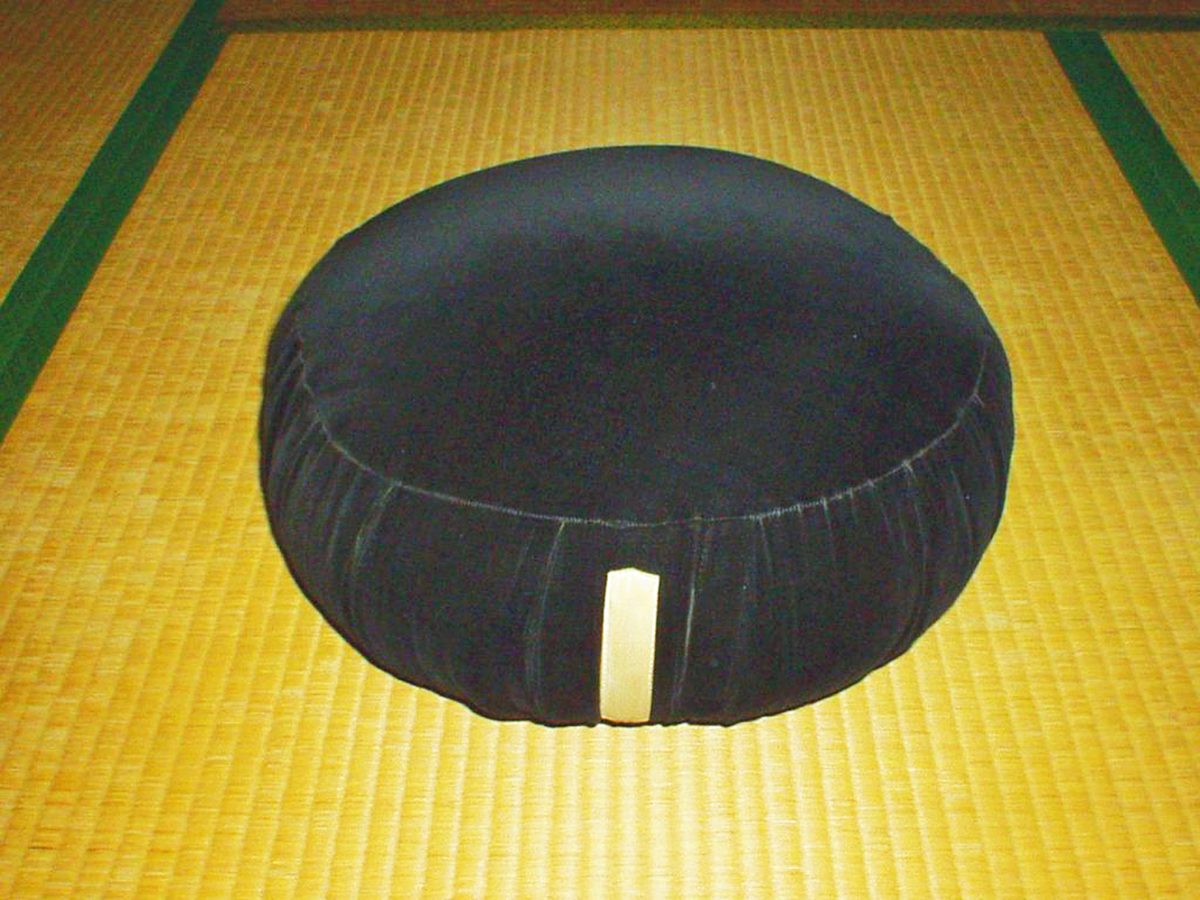
The Soto school's official English site describes the basics: sit upright on a cushion (zafu), keep your eyes slightly open and looking down at about 45 degrees, breathe quietly through your nose without trying to control it, and when thoughts come up, neither chase them nor fight them, simply return to your posture.
Zazen and "mindfulness"
You will often see zazen described as "Japanese mindfulness." There is a real connection, but it is worth being careful:
- Some temples use the word themselves. Kenchoji in Kamakura (Kanagawa) introduces its English session as a chance to "experience the practice of Zazen or Mindfulness."
- Zazen is a religious practice. In the Soto school's own translation of Fukan Zazengi, Zen master Dogen writes that "the zazen I speak of is not meditation practice." For many temples, zazen is not a technique for getting a result. Treat it as a religious practice and follow the temple's way.
- What the research says about mindfulness. The U.S. National Center for Complementary and Integrative Health (NCCIH) defines mindfulness as "maintaining attention or awareness on the present moment without making judgments." It says meditation and mindfulness may have health benefits, but that "much of the research on these topics has been preliminary or not scientifically rigorous." Most of that research looks at structured programs such as mindfulness-based stress reduction, not at a single temple session, so we make no health claims for zazen here.
- Not always comfortable. NCCIH notes that meditation is usually considered low-risk, but a 2020 review found that about 8 percent of participants reported a negative effect, most often anxiety or depression. If sitting in silence brings up something difficult, it's fine to stop, and to tell the monk.
Where visitors can try zazen
We only list temples whose own websites confirm all four things: whether you need to book, whether there is English guidance, the fee and the time. Checked October 4, 2026.
| Temple | Booking | English | Fee | When |
|---|---|---|---|---|
| Kenchoji (Rinzai) Kamakura (Kanagawa) "ZAZEN in English" | Required: email zazen-english@kenchoji.com (name, nationality, date) or fax the form | Yes. All instruction in English; chairs available | 1,000 yen, plus 500 yen temple entrance | 13:30–15:30 (doors 13:00) on set dates only. Remaining dates on the 2026–27 flyer: Oct 28, 2026, Nov 13, 2026 and Feb 26, 2027 |
| Kouunji (Soto) Setagaya (Tokyo) | For English instruction, email kouunzazen@outlook.jp in advance | Yes, on request by email | 500 yen | Every Saturday, 19:00–21:00; beginners' instruction from 18:30 |
| Daisen-in (Rinzai, Daitokuji sub-temple) Kyoto (Kyoto) Private "Premium Course" | Required, up to the day before; you request a date and time | Yes. The temple says staff guide overseas guests in English | From 30,000 yen per group (1–7 people) | About 90 minutes: zazen, garden guide, matcha |
| Taizo-in (Rinzai, Myoshinji sub-temple) Kyoto (Kyoto) Groups only | Required, 2 months to 2 weeks ahead; groups of 10 or more | Yes (English programs) | 5,000 yen per person (tax incl.), with temple tour | 90 minutes, any time 8:00–17:00 |
A few notes from the temples' pages:
- Kenchoji's regular sitting. Kenchoji also holds a free sitting every Friday and Saturday, 15:30–16:30, with no booking (you pay the 500 yen entrance fee). Its page does not mention English, and you must be in the hall 15 minutes before the start, because latecomers cannot join. The temple has announced no regular sittings on October 23, 24, 30 and 31, 2026; they resume on November 6.
- Kouunji. Its English page says beginners' instruction starts at 6:30 pm; the Japanese schedule gives the sitting as 7–9 pm, with a talk or discussion afterwards.
- Daisen-in. The temple also runs a regular sitting after closing time for 1,500 yen per person (booking recommended), but its page does not say whether it is in English. A larger private "Standard Course" (up to 80 people) starts from 45,000 yen per group.
- Taizo-in. The temple says it has one bilingual monk, so a sudden funeral can occasionally mean a cancellation.
A session, step by step
- Gassho and bowing. Gassho means holding your palms and fingers together in front of you, fingertips at about nose height, as a sign of respect. In Soto halls, you bow in gassho when you enter, at your seat (to the people next to you and across from you), and when the sitting ends. Copy what others do; nobody minds if a first-timer is a beat late.
- Your legs. In the full lotus (kekka-fuza), each foot rests on the opposite thigh. In the half lotus (hanka-fuza), only one foot rests on the opposite thigh; the Soto school says either leg can go on top. Knees on the mat and the base of your spine on the cushion form a stable triangle. You don't have to force your legs into lotus. Tell the monk if your knees or back hurt; Kenchoji's English session offers chairs to people who find sitting cross-legged difficult.
- Your hands. Usually right hand palm-up, left hand on top, thumb tips lightly touching, in front of your navel (the "cosmic mudra," hokkai-join).
- Getting up. Move slowly, especially if your legs have gone to sleep. Don't stand up suddenly.
- Walking meditation. Some sessions include kinhin, slow walking between sittings, with hands held at the chest (shashu). Kenchoji's English session includes it.
What to wear and bring
- Loose, modest clothes. Kenchoji recommends loose clothing. Shunkoin in Kyoto (Kyoto) asks for modest clothes and discourages short skirts for seated meditation. Shokokuji in Kyoto (Kyoto) asks people to avoid revealing clothes, hooded jackets, skirts and jeans. Eiheiji in Fukui Prefecture asks visitors to wear neat, modest clothing, and says loose-fitting clothes are better for zazen.
- Socks. You take your shoes off before entering the halls, so wear clean socks. Shunkoin says socks are required. A few temples ask you to sit without socks, so follow what you are told on the day.
- Cold halls. Temple buildings are often unheated. A warm layer you can sit in quietly helps in winter.
The keisaku stick, photos and phones
- The keisaku (or kyosaku) is usually only for people who ask. It is a flat wooden stick used to tap the shoulder muscles. The Soto school's guide says that if you want it, you signal with gassho and wait; when the stick is placed on your right shoulder, you lower your head to the left, then bow afterwards. Daisen-in's page similarly says you signal with gassho when your concentration slips. The exact signal differs by temple and school, and some sessions don't use it at all; the monk will explain. If you don't ask, you can simply keep sitting.
- Photos. Don't take photos during the sitting. Eiheiji's rules for visitors say photographing priests and monks is prohibited, and Engakuji in Kamakura (Kanagawa) asks visitors not to take photos at its sutra-copying venue. If you'd like a photo of the hall before or after, ask first.
- Phones. Turn your phone off (not just silent), and take off a watch that beeps. The hall is very quiet; even a vibration carries.
- Don't be late. Kenchoji says latecomers cannot join its regular sitting, and Shokokuji says people who arrive after the start are not admitted. Aim to arrive 15 minutes early.
- Talking. Kenchoji says private conversation in the hall is not allowed and that people who don't follow the monk's instructions may be asked to leave.
Staying at a temple (shukubo) and copying sutras (shakyo)
If one session leaves you wanting more, you can stay at a temple or try copying a sutra by hand (shakyo). Koyasan (Wakayama) is the best-known place for both. Note that Koyasan is the center of Shingon Buddhism, not Zen, so its meditation is different.
- Temple lodging. The Koyasan Shukubo Association (founded in 1958, with 51 temple lodgings) runs an official booking site in English. Some temples can be booked instantly; for the others, the association searches for a temple on your behalf, and requests must be made at least 14 business days ahead. It notes that most temple lodgings have shared toilets and baths. Some plans include sutra copying or ajikan meditation.
- Sutra copying. Kongobuji, Koyasan's head temple, offers sutra copying at the Daishi Kyokai hall every day, 8:30–15:00, for 1,500 yen (paper, a brush pen and a guide included). There are 22 seats.
- Ajikan meditation. Kongobuji runs short ajikan sessions (the Shingon school's breathing and meditation practice) on Fridays, weekends and holidays from April to November 2026, four times a day (9:00, 11:00, 13:30, 15:30), for 1,000 yen plus the temple admission. Instruction is in Japanese only, with an English text.
- Eiheiji (Fukui). The Soto school's head temple has an overnight "Sanzen" program with English-speaking priests (a 15,000 yen donation), but its English site says it is not accepting international visitors from spring through fall this year. Check its site for updates before planning.
Last reviewed: October 4, 2026. Temple schedules, prices and English availability change, and sessions can be cancelled for temple events. Please check the official pages below before you go.
References
- Kenchoji: Zazen (regular sitting, notes for participants) (Japanese)
- Kenchoji: News, including "ZAZEN in English 2026–27" flyer and the October 2026 schedule notice (Japanese and English)
- Kouunji: Zazen Sessions (English)
- Kouunji: Zazen schedule (Japanese)
- Daisen-in: Zazen courses (Japanese)
- Daisen-in: Private zazen courses (Japanese)
- Taizo-in: Experience Zen (English)
- Shunkoin: Zen Immersion schedule, dress code (English)
- Shokokuji: Zazen sessions and requests for participants (Japanese)
- Engakuji: Zazen and sutra copying (Japanese)
- Eiheiji: Official English site, rules for visitors and program notice
- Eiheiji: Details of Sanzen (English)
- Joint Council for Japanese Rinzai and Obaku Zen: What is Zen? (English)
- Soto Zen (SOTOZEN.COM): How to do Zazen (English)
- Soto Zen: Leaflet including manners in the zendo and the kyosaku (English, PDF)
- Soto Zen: Fukan Zazengi, Universally Recommended Instructions for Zazen (English)
- NCCIH (U.S. National Institutes of Health): Meditation and Mindfulness: Effectiveness and Safety
- Koyasan Shukubo Association: Temple stay booking request (English)
- Kongobuji: Experiences at Koyasan, ajikan and sutra copying (Japanese)