Shrines vs Temples in Japan: How to Tell Them Apart and How to Pray
Japan has tens of thousands of shrines and temples, and on a trip you will walk through both, often on the same day. They can look alike, but they belong to two different faiths, and the way people pray is a little different. You don't need to be Shinto or Buddhist to visit or to pray. What matters is showing respect, and nobody expects a visitor to get every bow right. This guide explains how to tell a shrine from a temple, the basic way to pray at each, and the few things to avoid at both, based on the official pages of shrine associations, temples and tourism bodies.
This page may contain affiliate links. If you buy through them, we may earn a commission at no extra cost to you.
- Shrine or temple? A quick table: faith, gate, what is worshipped, buildings and people
- Why shrines and temples were once mixed together
- Praying at a shrine: torii, water basin, offering, bell, two bows and two claps
- Praying at a temple: the gate, incense, hands together and no clapping
- At both: photos, hats, noise, goshuin, torii and coins
A note before you start. Manners differ from place to place, and every shrine and temple can set its own way. What follows is the common basic form. When a sign or a staff member says something different, follow the local guidance. If you are not religious, that's fine: a quiet bow and a moment of respect is enough.
Shrine or temple? The quick table
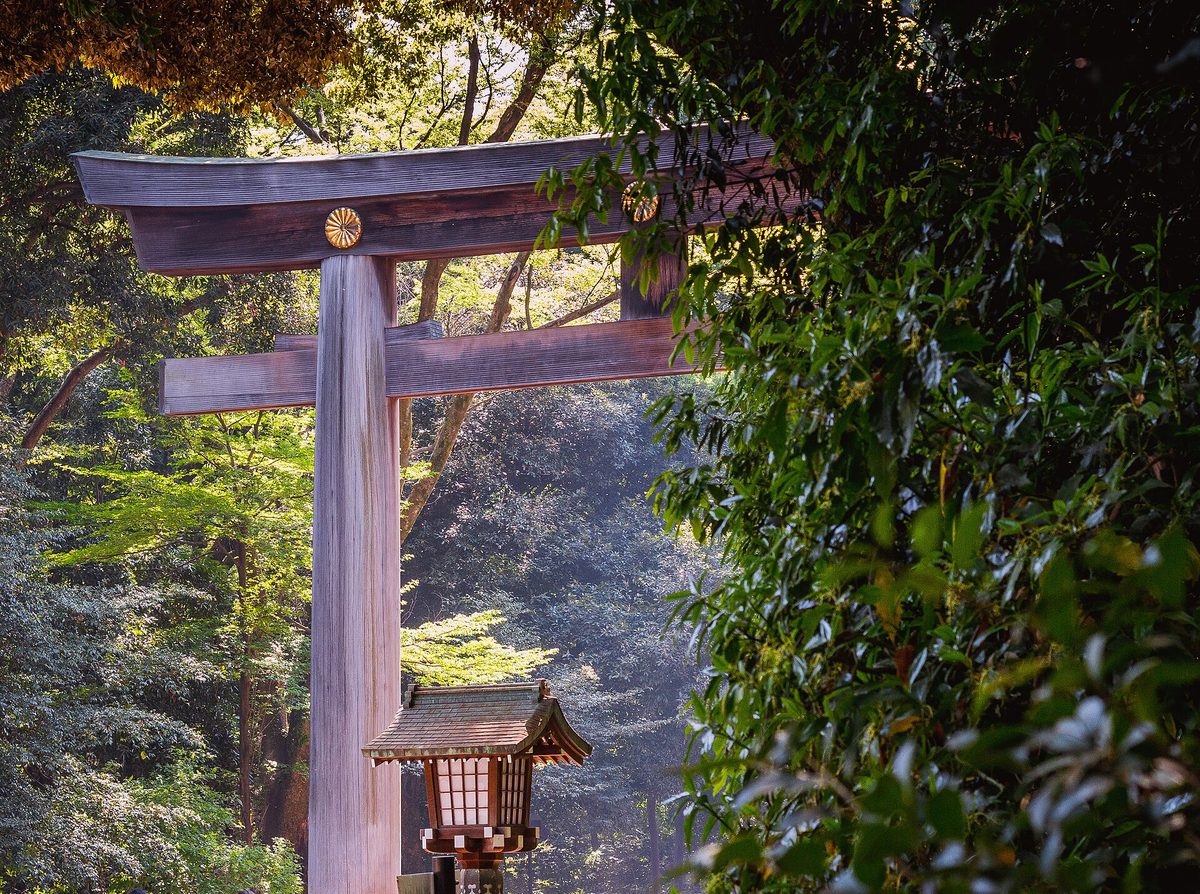
A shrine (神社, jinja) belongs to Shinto, Japan's native faith. A temple (寺, tera or -ji) belongs to Buddhism, which came to Japan in the mid-6th century. According to the Agency for Cultural Affairs' Religious Yearbook, there were 84,014 Shinto and 76,493 Buddhist registered religious corporations in Japan on December 31, 2024. Most of them are shrines and temples.
| Shrine (jinja) | Temple (tera) | |
|---|---|---|
| Faith | Shinto | Buddhism |
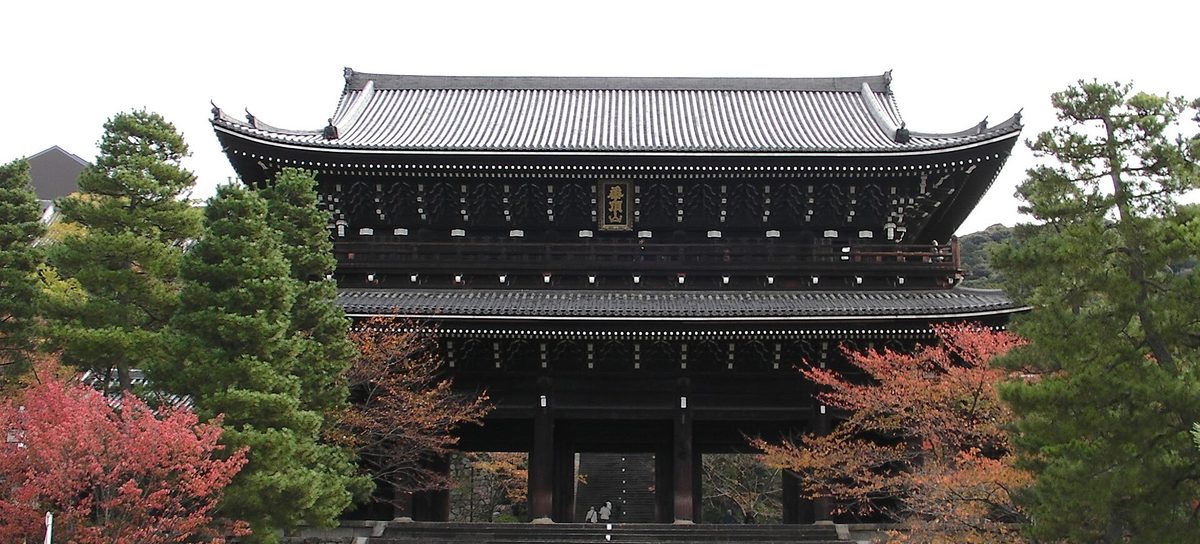
| Entrance | Torii (鳥居), a gate of two posts and crossbeams, often red or plain wood | Sanmon (山門), a roofed gate, sometimes with two fierce guardian statues |
| What is worshipped | Kami (神様), the Shinto deities | Buddhas and bodhisattvas (仏様), often as statues |
| Main buildings | Honden (本殿), where the kami is enshrined, usually behind the haiden (拝殿), the hall where you pray | Hondo (本堂), the main hall with the temple's principal image |
| Who works there | Shrine priests (shinshoku, 神職) and miko (巫女), women who assist the priests, usually in white and red | Buddhist monks and priests (僧侶) |
| How people pray | Two bows, two claps, one bow | Hands together, a bow, no clapping |
| Charms, fortunes, goshuin | Both: omamori (charms), omikuji (fortune slips) and goshuin (handwritten seals) are found at shrines and at temples, though not every place has all three. Ise Jingu, for example, has never had omikuji. | |
The table follows the Japan National Tourism Organization (JNTO), the Nara City Tourism Association, the Tokyo Prefectural Shinto Association's Q&A on shrine buildings and on miko, and Ise Jingu's own guide.
Why they sometimes look alike
For many centuries, Shinto and Buddhism were practiced together in Japan. This is called shinbutsu-shugo (神仏習合), the blending of kami and buddhas: many shrines were looked after by Buddhist monks and held Buddhist images. In 1868 the new Meiji government ordered shrines and temples to be separated. As the Ministry of Education's official history notes, the order set off a movement against Buddhism across the country that hit temples hard. Today shrines and temples are separate, but because of this long shared history you may find them close together.
How to pray at a shrine
The basic form below follows the Association of Shinto Shrines (Jinja Honcho), which includes most shrines in Japan, and the Tokyo Prefectural Shinto Association's worship guide.
- Bow once at the torii. The torii marks the boundary of sacred ground. Bow lightly before you pass through it. JNTO adds that it is customary not to walk through the exact center: keep a little to the left or right. Many shrines explain that the middle of the approach (seichu) is for the kami. Some shrines ask for a direction: at Ise Jingu in Ise (Mie), you keep right at the Inner Shrine and left at the Outer Shrine.
- Purify at the water basin (temizuya or chozuya). With the ladle in your right hand, pour water over your left hand. Switch hands and wash your right hand. Take the ladle in your right hand again, pour water into your cupped left hand and rinse your mouth. Then wash your left hand once more, tilt the ladle up so the last water runs down the handle, and put it back. Never drink from the ladle directly, and don't let used water fall back into the basin. One scoop of water is enough for all of it.
- No ladles? Some basins now have running water and no ladles. The Tokyo Prefectural Shinto Association's guide for that case: wash both hands, rinse your mouth from your cupped hands, then wash your hands again. Carry a handkerchief to dry your hands.
- Make an offering. At the offering box (saisen-bako) in front of the hall, bow lightly and put in a coin as a sign of your sincerity. Drop it in gently from close by; please don't throw it hard from a distance.
- Ring the bell, if there is one. Pull the thick rope to ring the bell above the box. The Tokyo Prefectural Shinto Association explains that its clear sound calls the kami before you pray. Not every shrine has one.
- Bow twice, clap twice, bow once (nihai nihakushu ippai). Stand straight and make two deep bows, with your back flat, bending about 90 degrees. Put your hands together at chest height, slide your right hand down a little, open your hands to about shoulder width and clap twice. Put your hands together and pray. Lower your hands and make one more deep bow.
- Bow lightly and step back, so the next person can pray.
Not every shrine is the same. Jinja Honcho says that while two bows, two claps and one bow is the basic form nationwide, some shrines have their own special way, and you should follow it there. The best-known example is Izumo Taisha in Izumo (Shimane), where people pray with two bows, four claps and one bow, as Shimane Prefecture's guide explains. If you aren't sure, watch what local visitors do or look for a sign near the hall.
How to pray at a temple
Temples are generally less formal than shrines, and the form differs by Buddhist school. The steps below are the general way described by the Nara City Tourism Association and JNTO.
- Bow at the gate. At the sanmon, put your palms together in front of your chest (gassho) and bow. Step over the threshold at the bottom of the gate rather than on it.
- Wash at the basin, if there is one. It is the same as at a shrine.
- Incense, if you like. Many temples sell incense sticks (osenko). Light them, then put out the flame by waving your hand, not by blowing on it, and stand them in the burner. At a large burner with smoke always rising (jokoro), you will see people waving the smoke over themselves; it is believed to be healing. This is optional. At Koyasan (Wakayama), the Koyasan Shingon school's guide asks visitors to light candles from the pilot flame, place candles from the back, and place incense in the middle.
- Make an offering. Put a coin quietly into the offering box. The Nara City Tourism Association says even a tiny amount is meaningful.
- Pray with your hands together, without clapping. Face the main image, stand straight, put your hands together and bow. Pray silently. Clapping is the shrine way; the Nara City Tourism Association asks visitors not to clap at temples. At Senso-ji in Tokyo (Tokyo), the temple suggests saying "Namu Kanzeon Bosatsu" with your palms together.
Want to go further than a short prayer? Some temples welcome visitors to sit in meditation: see our guide to trying zazen at a temple.
At both: what to avoid
Shrines and temples are places of worship first, and sightseeing spots second. The Nara City Tourism Association puts it simply: be considerate of the people who are there to pray. A few things matter everywhere:
- Photos. Watch for no-photo signs, which are common inside halls. At Koyasan, photos are not allowed inside the halls such as the Konpon Daito and Kondo, or beyond the bridge into Okunoin's inner area, according to the Koyasan guide. Ise Jingu forbids photos in its no-photo areas, as well as tripods kept in one place for a long time, stepladders, drones, live streaming and commercial filming. Try not to include other worshippers in your pictures.
- Hats and sunglasses. The Nara City Tourism Association asks visitors to take off hats and sunglasses and to avoid revealing clothing. The Fukuoka Prefectural Shinto Association says to take off your hat before the kami, even outdoors.
- Keep your voice down. JNTO asks visitors not to speak loudly or shout, and to be respectful of worshippers. Set your phone to silent.
- Goshuin are not stamps. A goshuin is a handwritten seal given as proof of worship. The Miyagi Prefectural Shinto Association asks people to pray first, not to treat it as a stamp rally, not to rush the person writing it, and not to buy or sell goshuin online. Each one is written by hand, so no two look exactly the same.
- Don't climb or hang on a torii, and don't touch, write on or carve shrine and temple buildings. Damage made the news in 2024; see what made the news, and what to do instead.
- Don't throw coins at the offering box. Put them in gently. The Kagawa Prefecture Tourism Association's pilgrimage guide says plainly: never throw your offering.
- Take your trash with you, and follow each place's route and rules.
Planning visits? The busiest shrine and temple areas have their own rules: Gion (Kyoto) has private lanes where photos are restricted, and our destination pages for Ise (Mie) and Nara (Nara) list the local guides.
Quick checklist
- Torii = shrine (Shinto). Roofed gate, incense = temple (Buddhism).
- At the gate: bow lightly, and keep a little to the side of the center.
- Water basin: left hand, right hand, mouth from your hand, left hand. Never drink from the ladle.
- Shrine: coin, bell, bow twice, clap twice, bow once.
- Temple: coin, hands together, bow. No clapping.
- Hats off, voice down, look for no-photo signs, coins in gently.
- When a sign or a staff member says something different, follow it.
Last reviewed: October 4, 2026. Each shrine and temple can have its own manners. Please follow the guidance on site and on the official pages below.
References
- Association of Shinto Shrines (Jinja Honcho): How to worship (Japanese)
- Tokyo Prefectural Shinto Association (Tokyo-to Jinjacho): Worship manners, including water basins without ladles (Japanese)
- Tokyo Prefectural Shinto Association: What buildings does a shrine have? (Japanese)
- Tokyo Prefectural Shinto Association: Why ring the bell before praying? (Japanese)
- Tokyo Prefectural Shinto Association: What is a miko? (Japanese)
- Fukuoka Prefectural Shinto Association: Worship manners (Japanese)
- Miyagi Prefectural Shinto Association: Goshuin manners (Japanese)
- Ise Jingu: A first visit, worship manners and Q&A (Japanese)
- Ise Jingu: Frequently asked questions, including photography (Japanese)
- Shimane Prefecture: Visiting Izumo Taisha, two bows, four claps, one bow (Japanese, PDF)
- Japan National Tourism Organization (JNTO): Shrine and Temple Traditions (English)
- JNTO: Shrine and temple visits, best practices (English, 2020)
- Nara City Tourism Association: Etiquette at shrines and temples (English)
- Senso-ji: Frequently asked questions (Japanese)
- Koyasan Shingon school (Koyasan Shingonshu Sanyokai): Worship manners at Koyasan (Japanese)
- Kagawa Prefecture Tourism Association: How to worship on the Shikoku pilgrimage (Japanese)
- Agency for Cultural Affairs: Religious Yearbook (Japanese)
- Agency for Cultural Affairs: Religious statistics survey, main results, December 2025 (Japanese, PDF)
- Ministry of Education, Culture, Sports, Science and Technology: A Hundred-Year History of the School System, Religion (Japanese)